


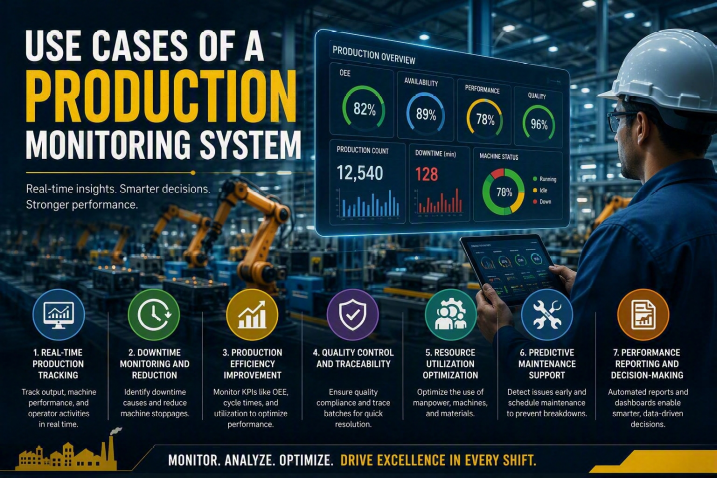
Use Cases of a Production Monitoring System
In today’s highly competitive manufacturing environment, organizations must maximize efficiency, reduce downtime, and maintain consistent product quality. A Production Monitoring System (PMS) provides real-time visibility into manufacturing operations, enabling data-driven decisions and improved productivity.
Key Use Cases of a Production Monitoring System
1. Real-Time Production Tracking
A Production Monitoring System helps supervisors track machine performance, production output, and operator activities in real time. This visibility allows teams to quickly identify bottlenecks and take corrective actions before they impact overall production targets.
2. Downtime Monitoring and Reduction
Unexpected machine downtime can significantly affect productivity and profitability. A PMS records downtime events, identifies root causes, and generates actionable reports, helping manufacturers reduce machine stoppages and improve equipment availability.
3. Production Efficiency Improvement
By monitoring key performance indicators (KPIs) such as Overall Equipment Effectiveness (OEE), cycle times, and utilization rates, manufacturers can identify inefficiencies and optimize production processes for maximum output.
4. Quality Control and Traceability
Production monitoring systems provide detailed production records that help maintain product quality and ensure compliance with industry standards. In the event of defects, manufacturers can quickly trace affected batches and take corrective measures.
5. Resource Utilization Optimization
A PMS enables better management of manpower, machines, and materials by providing accurate production insights. This helps organizations allocate resources effectively and minimize waste.
6. Predictive Maintenance Support
By continuously collecting machine performance data, production monitoring systems can identify unusual patterns and potential equipment failures. This enables maintenance teams to schedule preventive actions, reducing costly breakdowns.
7. Performance Reporting and Decision-Making
Automated dashboards and reports give management a comprehensive view of production performance. These insights support strategic decision-making, capacity planning, and continuous improvement initiatives.
Conclusion
CIPLs’ Production Monitoring System is no longer a luxury but a necessity for modern manufacturing operations. From real-time visibility and downtime reduction to quality assurance and predictive maintenance, it empowers organizations to achieve higher productivity, lower operational costs, and improved overall efficiency. By leveraging a robust production monitoring system, manufacturers can stay competitive and drive sustainable growth in an increasingly demanding market.